

Talk to our Doctor


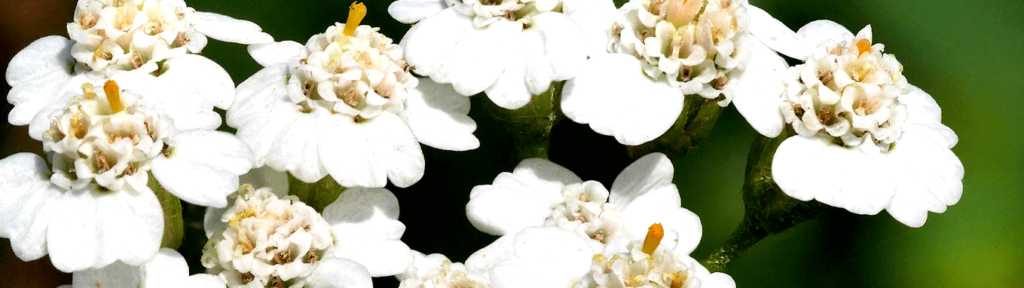
Biranjasif
Botanical Name
Achillea millefolium L.
Family
Asteraceae / Compositae.
Synonyms
Achillea albida Willd., Achillea ambigua Boiss., Achillea angustissima Rydb., Achillea borealis Bong., Achillea californica Pollard, Achillea dentifera Rchb., Achillea lanata Lam., Achillea laxiflora Pollard & Cockerell, Achillea magna L., Achillea marginata Turcz. exLedeb., Achillea megacephala Raup, Achillea occidentalis (DC.) Raf. exRydb., Achillios millefoliatus St.-Lag.
Regional Name
English : Bloodwort, Milfoil, Sanguinary, Stanchgrass, Thousand-leaf, Yarrow
Hindi : Bhut kesi, Gandrain, Puthkanda
Urdu : Baranjasif, Brinjasuf, Buiranjasif, Tukhm Gandana
Marathi : Rojmaari, Tamil : Achchilliya
Part Used
Flower & Whole Plant.
Description
Biranjasif is an erect, herbaceous, perennial plant that produces one to several stems 0.2–1 m (0.66–3.28 ft) in height, and has a spreading rhizomatous growth form. It is globally distributed in North America, Europe, Asia, and India and is widely naturalized in temperate regions. Within India, it has been recorded in the Himalayan region of Jammu & Kashmir, Himachal Pradesh, Uttarakhand in an altitude range of 1050-3600 m. The leaves are 5–20 cm (2.0–7.9 in) long, bipinnate or tripinnate, almost feathery, and arranged spirally on the stems. The leaves are cauline, and more or less clasping. The inflorescence has 4 to 9 phyllaries and contains ray and disk flowers which are white to pink.
Phytoconstituents
It contains volatile oil, caryophyllene, achillein, achilleic acid, aconitic acid, resin, tannin, and gum. The basic components are Alpha Pinene, Acetate, Borneol, Beta-Pinene, Borneol, Cineole, Camphene, Camphor, Gamma-Terpinene, Isoartemisia Ketone, Chamazulene, Limonene, Sabinene, and Tricyclene.
Ayurvedic Properties
Rasa : Tikta, Katu, Kasaya, Guna : Tiksna, Virya : Usna, Vipaka : Katu, Karma : Vatahara, Kaphahara, Rasayana, Ubhayatobhagahara.
Medicinal Uses
It is used for bleeding piles, kidney disorders, infections and bleeding. It stops bleeding wounds, lessens menstrual bleeding, helps to better circulation. It is also used for wounds and to treat gastrointestinal problems. It is used for fever, common cold, hay fever, absence of menstruation, dysentery, diarrhea, loss of appetite, gastrointestinal (GI) tract discomfort, and to induce sweating. Some people chew the fresh leaves to relieve toothache. It is applied to the skin to stop bleeding from hemorrhoids; for wounds; and as a sitz bath for painful, lower pelvic, cramp-like conditions in women, menorrhagia, amenorrhea, uterine hemorrhages, and leucorrhea.
Ayurvedic Applications
Anaha, Arsa, Grdhrasi, Gandamala, Gulma, Jvara, Kandu, Kaphavataja roga, Krmi, Kustha, Sotha, Prameha, Raktavikara, Tvak roga, Udara , Udavarta,Vrana.
Information on this website is provided for informational purposes and is not meant to substitute for the advice provided by your own physician or other medical professionals. This website is meant for use by Indian residents only.